
In version 2.1.2, we've made it possible to define requirements in vertical tables.
Vertical tables
|
The first section of this page represents a requirement defined in a vertical table: |
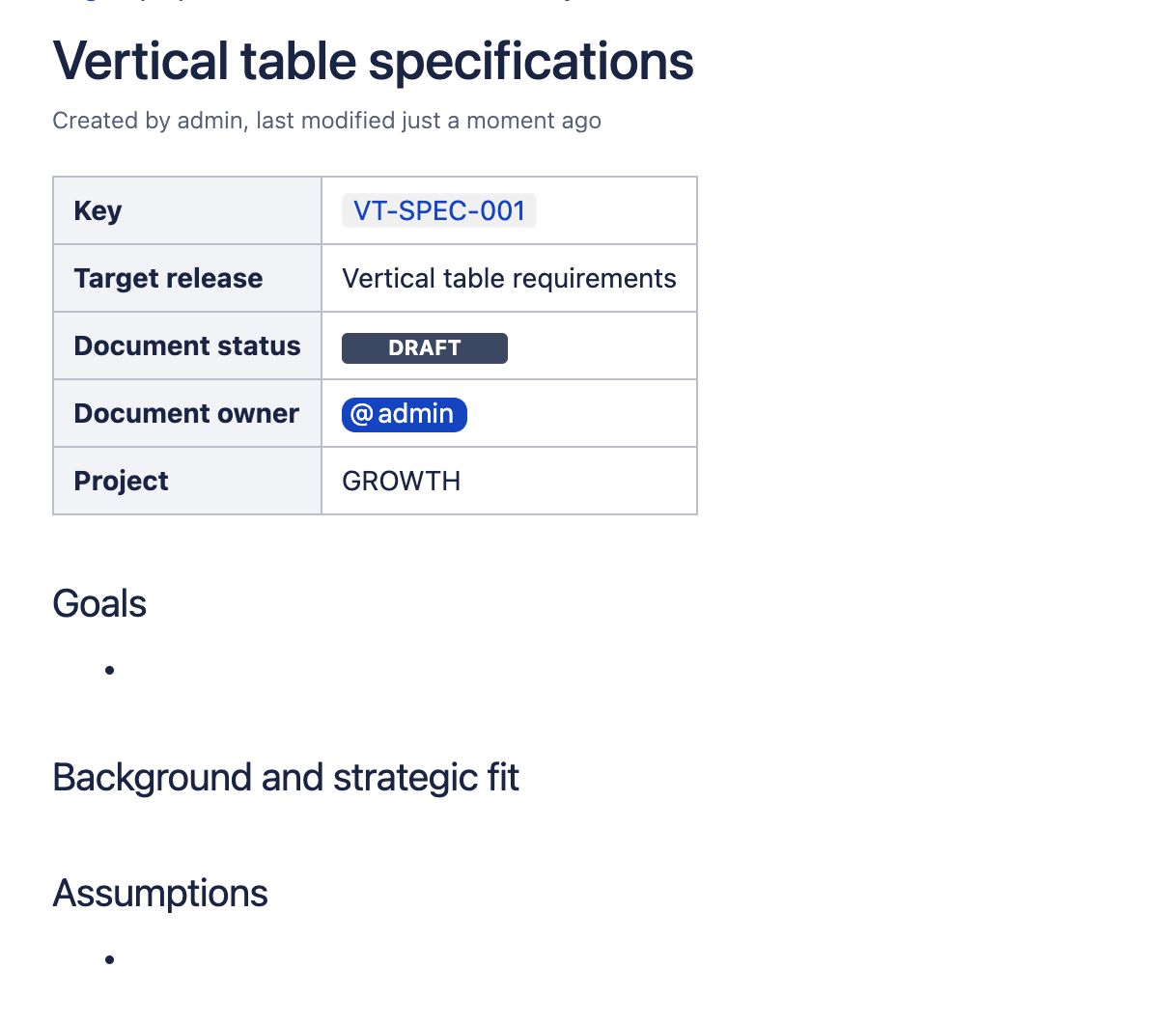
|
|
Rows of the table are mapped to properties: |
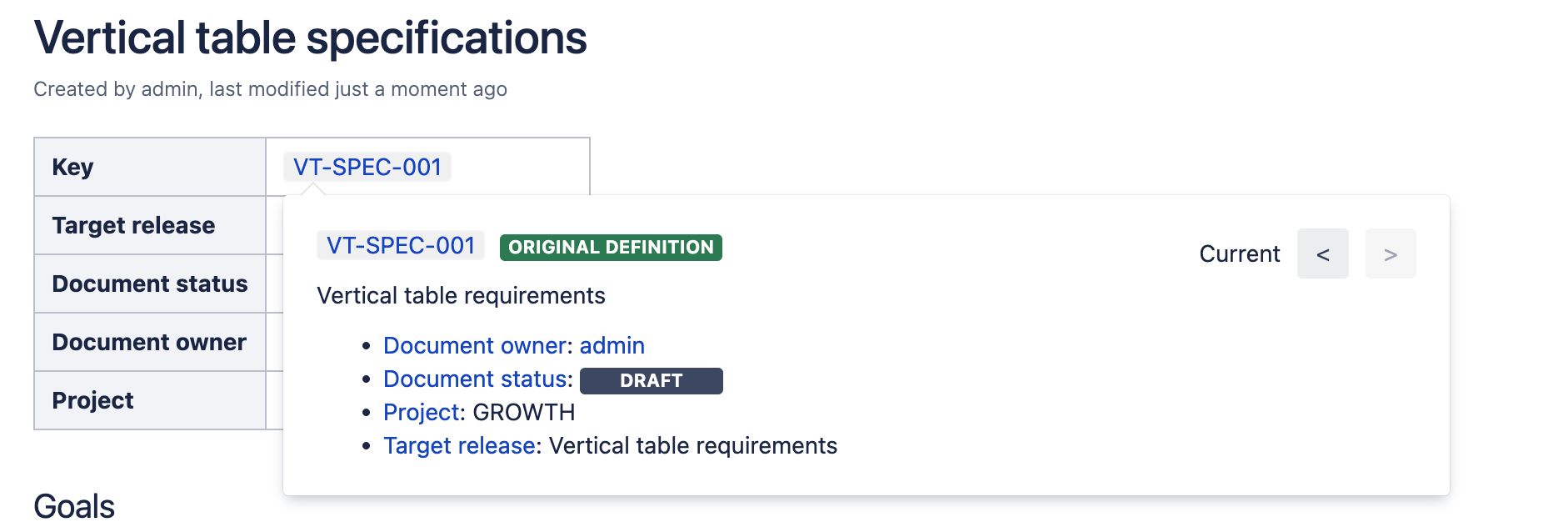
|
To define requirements in a vertical table
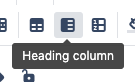
Important: Use the "Heading" button to set the first column gray. Don't just paint the background in gray and don't just make the text bold.
-
2 columns exactly,
-
At least 3 rows,
-
The first column must be a header (the <th> element, or one must have used the "Heading column" icon in the toolbar),
-
The second column must be white cells (the <td> element).
-
No cell must be merged,
-
A requirement definition must be present.
Features
-
It is possible to use dependencies, properties and the RY Property macros, like for normal table,
-
In Indexing Version 1, every definition requirement in the page will be identified as child requirements of the 1 requirement defined in the vertical table.
Dependencies
It works the same way as the horizontal tables, mention a link on another requirement’s definition and it will be assigned as a dependency.
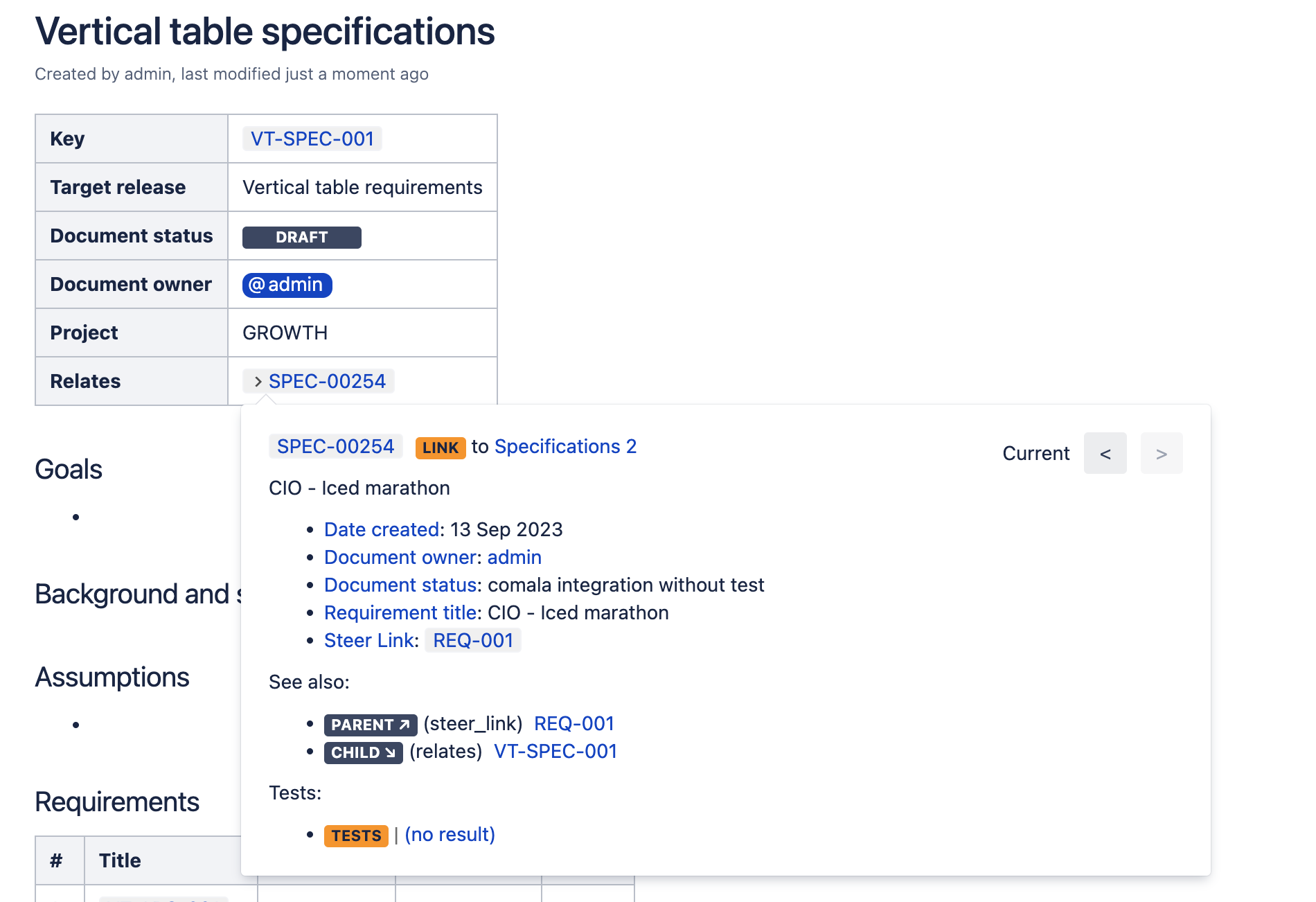
Vertical Requirements solve a lot of the hopes put in RY-107 , so please try them and give us some feedback after using them.